
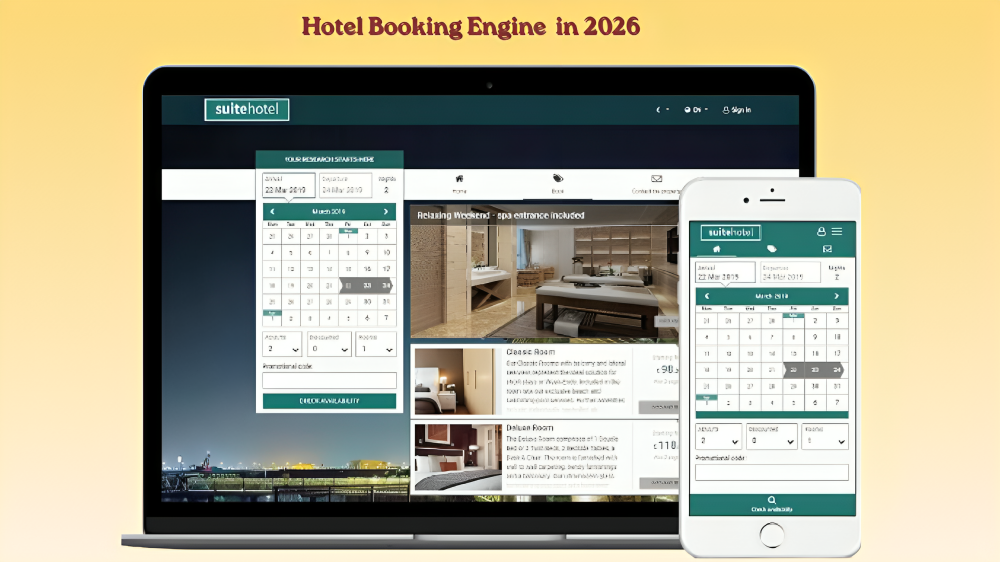
Digital technology has revolutionized the hospitality sector in numerous ways. Online tools are essential for hotels today, as they use it to market their establishment and to keep the books open effectively. In this transformation, the Hotel Booking Engine is one of the most critical tools. Having a well-designed Hotel Booking Engine gives hotels the ability to accept bookings directly from its website, and not entirely relying on third party platforms.
Besides, a modern Hotel Booking Engine can also boost the conversion rate of hotels and cut cost in operation. A smooth booking process makes guests feel confident about booking rooms online. Thus, the hotels gain an increased amount of direct bookings and improved customer satisfaction. In this article I will take you through the workings of a hotel booking engine, what it is advantageous, what are its key functions, its price and some suggestions on how to choose the ideal booking engine for your hotel.
What is a Hotel Booking Engine?
A Hotel Booking Engine is a part of a website that enables visitors to search for, choose and book hotel rooms from the hotel internet site. It integrates with the hotel’s property management system (PMS) to reflect precisely what is available, how much it costs, and the information needed for customers.It interfaces with the hotel’s property management system (PMS), which updates its availability, cost, and information in real time.
In addition, you have a secure payment gateway for your Hotel Booking Engine and you receive real-time booking confirmation emails. Due to this automation, hotels lower the manual efforts and avoid double bookings.
Why Hotels Need a Hotel Booking Engine
There is plenty of competition for hotels in today’s online world. So using only third party travel channels can lead to lower profits from commission. A Hotel Booking Engine assists the hotel institutes control over their own bookings.
Moreover, visitors want an instant and hassle-free reservation process. The reliable Hotel Booking Engine in the website makes it possible to make the booking of the room at the website without having to change the platform.
How Does a Hotel Booking Engine Work?
A hotel booking engine is based on integration with various hotel booking systems. Its main advantage is that it integrates directly with property management systems, with instant access to an up to date room inventory and pricing.
Since then, whenever this visitor comes back to the hotel’s website, the Hotel Booking Engine can present them with available accommodation for the dates they’ve chosen. This will allow the guest to compare the rooms, amenities, and prices, and can help them determine the best hotel for their needs.
Hotel Booking Engine Process Overview
| Step | Process | Result |
| Search | Guest enters travel dates | Available rooms appear |
| Selection | Guest chooses room type | Room added to booking |
| Payment | Secure payment gateway | Transaction completed |
| Confirmation | Booking confirmation sent | Reservation stored in system |
Key Benefits of Using a Hotel Booking Engine
A modern Hotel Booking Engine provides several advantages for hotels of all sizes. These benefits help hotels increase revenue while improving the guest experience.
Benefits of a Hotel Booking Engine
| Benefit | Description |
| Direct Reservations | Reduces dependence on third-party platforms |
| Higher Revenue | Eliminates OTA commission costs |
| Real-Time Availability | Displays accurate inventory and pricing |
| Secure Payments | Protects customer payment data |
| Mobile Bookings | Enables reservations from smartphones |
| Better Guest Experience | Simple booking process increases satisfaction |
First, a Hotel Booking Engine increases direct bookings. This means hotels keep more revenue instead of paying commission to travel websites.
Second, the system improves operational efficiency. Hotel staff spend less time managing manual reservations because the Hotel Booking Engine automates the entire process.
Essential Features of a Hotel Booking Engine
Choosing the right Hotel Booking Engine requires understanding the essential features that improve performance and guest experience.
Important Features of a Hotel Booking Engine
| Feature | Purpose |
| Real-Time Availability | Shows accurate room inventory |
| Payment Gateway | Secure online transactions |
| Mobile Compatibility | Supports smartphones and tablets |
| Multilingual Support | Helps international travelers |
| Multiple Currency Options | Allows global payments |
| PMS Integration | Syncs with hotel management systems |
| Analytics Dashboard | Tracks bookings and revenue |
| Promotional Tools | Offers discounts and packages |
It’s to the point of ensuring real-time availability, first off. Before guests book, they require education before making their reservations. Thus, there is a need to have the room inventory refreshed at the same time of usage by the Hotel Booking Engine.
Secondly, it must be usable on mobile devices. Combinations of smart phones and social media are booking rooms for many travellers. Get a seamless mobile experience with a responsive Hotel Booking Engine.
Last but not least, reporting and analytics tools enable hotels to track booking trends and customer behavior. This information facilitates improved information that aids decision making.
Types of Hotels That Use a Hotel Booking Engine
Different types of properties use a Hotel Booking Engine depending on their size and operational needs.
Hotels Using Booking Engines
| Property Type | Usage |
| Boutique Hotels | Increase direct reservations |
| Luxury Hotels | Provide premium booking experience |
| Resorts | Manage high room inventory |
| Bed & Breakfast | Simplify reservation management |
| Budget Hotels | Reduce administrative workload |
For example, boutique hotels use a Hotel Booking Engine to create a personalized booking experience. Meanwhile, large resorts rely on advanced booking systems to manage multiple room categories and packages.
Pricing of Hotel Booking Engine Systems
The pricing of a Hotel Booking Engine usually depends on the provider and the features included. Most modern systems operate on a subscription-based model.
Hotel Booking Engine Pricing Models
| Pricing Model | Description |
| Subscription (SaaS) | Monthly or yearly payment |
| Commission-Based | Percentage charged per booking |
| Hybrid Model | Combination of subscription and commission |
| Custom Pricing | Tailored solutions for large hotels |
Many hotels prefer subscription models because they avoid commission charges on direct bookings. Therefore, hotels can maximize revenue from their official website.
However, smaller properties sometimes choose commission-based models to reduce upfront costs.
Tips for Choosing the Best Hotel Booking Engine
Choosing the correct Hotel Booking Engine necessitates examining a number of factors.
First and foremost, hotels need to conduct some user experience testing. The user interface might be difficult to navigate, creating a drop in the number of bookings that can be made. Thus, it is necessary to have a simple and rapid booking process.
Second, integrations are important features. The Hotel Booking Engine should seamlessly integrate into the Property Management System (PMS) and channel management system as well.
Third, vendors’ services to the hotel must be reviewed. Technical issues can impact reservations. Customer support is vital to help ensure smooth operations.
Implementation of a Hotel Booking Engine
When implemented with a cloud-based Hotel Booking Engine it takes enough short time. However, if it is properly set up it will run smoothly.
At implementation, facilities execute several components including the set up of rooms stock, price guidelines, as well as the integration of payment gateways within an internet-based resource.At implementation, motels run a number of specific components including room stock setup, price guidelines and integration of payment gateways into an internet-based resource.
Additionally, hotels add the booking widget to their website. This is a widget that provides integration between the website and Hotel Booking Engine.
Challenges of Using a Hotel Booking Engine
While a Hotel Booking Engine can present several benefits, there can be difficulties for hotels when implementing it.
For example, if a website is poorly designed, it can decrease the conversion of bookings. The Hotel Booking Engine will load slowly so the website may be abandoned by potential guests.
An additional difficulty is integration issues. The Hotel Booking Engine may not always align itself with the existing hotel systems.
Future of Hotel Booking Engine Technology
The travel sector still continues to undergo changes with new technology. So, the Hotel Booking Engine will undergo continuous innovations.
The role of AI in the future is going to be significant with regard to booking systems. AI Hotel Booking Engines can make personalized proposal recommendations for rooms based on user actions.
But, mobile-first design will also gain further significance. Using a smart phone for travel planning is an increasing trend amongst travelers.
Conclusion
A Hotel Booking Engine is an indispensable tool for contemporary successful hotels. It enables direct bookings, less dependence on platforms, and enhance the guest experience.
Plus, it helps streamline the hotel booking process by automating the entire process, processing payments securely, and keeping it up-to-date. Hotels with a solid system have better conversion rates and earning more due to the benefits of the system.
When deciding on which Hotel Booking Engine to adopt, however, it is critical to take into account features, charging structures, as well as integration capabilities. Before choosing one of the providers, you need to study the needs of your hotel.
Read More Blogs: ERP Software: The Best Manufacturing ERP Systems in 2026