
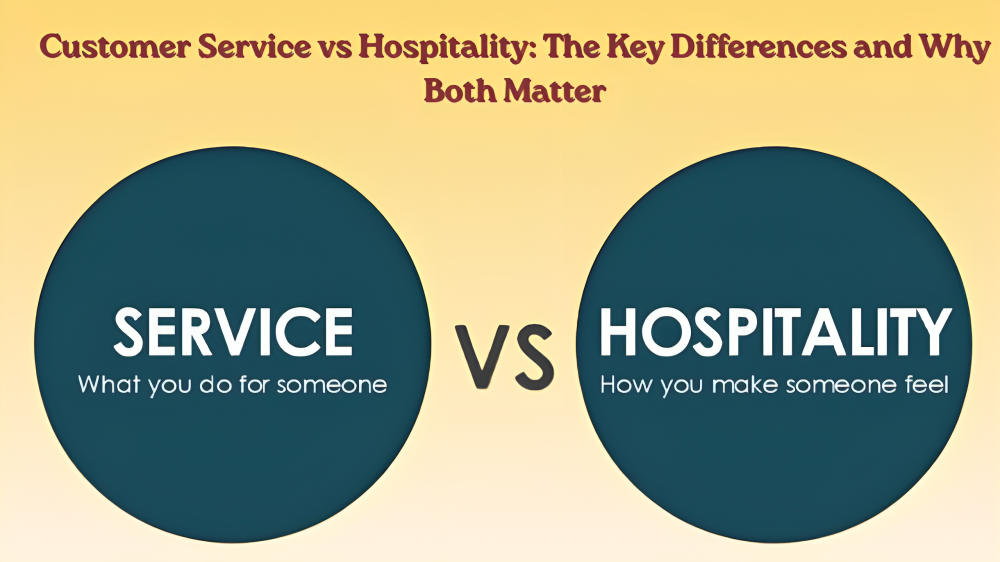
Businesses always strive to better themselves in customer care in the competitive service world. But, along with a number of individuals, there are those that mix up Customer service vs hospitality, which are both about improving the customer experience and providing support to customers. They have very similar intentions, but differing approaches and ways of thinking. Knowing the difference between Customer service vs hospitality will enable businesses to provide a better customer experience and maintains good relationships with their customers.
The Customer-service department involves the problems which everyone is seeking to solve, answering inquiries, and tracking requests quickly. However, hospitality is based on feelings and interpersonal relationships. It is intended to make the customers feel welcomed, valued and comfortable. When these two strategies go hand-in-hand, businesses can delight customers with memorable experiences that they will want to experience again.
What is Hospitality?
Hospitality is characterised by establishing relationships and making people feel “at home”. In one word: hospitality, providing comfort, warmth, and real care at a customer’s interaction. Customer service reacts to needs, hospitality anticipates needs. Employees make an effort to know enough about guests to assist them before they seek assistance.
A hotel receptionist who speaks to a guest by name and offers him a drink of welcome is being hospitable. This little action makes a personal touch and enhances the guests’ experience. Hospitality Workers listen to feelings and focus on specifics. They observe before them which products customers are buying and attempt to offer a customized service.
What is Customer Service?
In the service oriented business, the objective of customer service is to resolve issues and provide customer support when customers request it. Typically occurs when a customer makes a question, has a problem, or requires instructions. The job of a customer service representative is not the same as a customer’s job in the hospitality business and is more task oriented and transactional.
A hotel, for instance, could be contacted by a client due to a problem with paying online. A tech support individual promptly offers an alternate payment method and fixes the problem. In this scenario, the agent is able to provide excellent customer service by solving the issue effectively and efficiently.
But with customer service, it’s not always about emotions. Its primary function is ensuring the smooth running of operations and support to customers. That’s why many businesses teach their customer service staff to be fast, clear, and accurate.
Key Differences Between Customer Service vs Hospitality
Learning the difference between Customer service vs hospitality becomes more simple when looked at in regard to their difference. They collaborate successfully but their priorities, speeds and strategies vary.
1. Touchpoints
Customer service typically takes place in particular scenarios like answering queries, confirming reservations and resolving complaints. Such interactions are frequently at the stage of people asking for help.
Hospitability is found all along the way, by contrast. It starts as soon as a customer comes in contact with a brand and remains even after they have moved away. Hospitality is about the heartfelt encounter on every point of contact.
2. Immediacy
Customer service includes prompt responses and immediate solutions. When a customer encounters problems, they’d like quick aid. This streamlines the working process for service teams, enabling them to respond promptly and effectively.
Hospitality, however takes time to come into being. It includes thoughtful interactions, personalization and emotional understanding. A marathon build-up of trust is hospitality as opposed to the Sprint of customer service.
3. Training and Skills
There are also differences in training between Customer Service positions and Hospitality positions. Funeral directors may take hospitality management courses and learn about guest experience tactics. They are taught to be empathetic, to be able to communicate and to be personalized.
Typically, customer service workers are trained in the product to handle issues correctly. They get trained technical information, how to book, policies and troubleshooting.
4. Job Focus
Hospitality positions may be face to face. The persons working at the front desk, in the restaurant or as concierges have direct contact with the visitors. Their mission is to provide welcoming, memorable experiences.
Customer service departments are sometimes behind the scenes. They take calls, message clients or staff via email, or manage a chat service. They are committed to addressing problems in a timely manner with a high degree of transparency.
Comparison Table: Customer Service vs Hospitality
| Feature | Customer Service | Hospitality |
| Main Focus | Problem solving and assistance | Creating emotional connection |
| Interaction Style | Task-oriented and reactive | Personalized and proactive |
| Speed | Immediate responses | Long-term relationship building |
| Job Environment | Call centers, support teams | Front desk, restaurants, guest areas |
| Goal | Resolve customer issues quickly | Make guests feel valued and welcome |
The table below illustrates how Customer service vs hospitality work in tandem with one another but are distinct, yet both serve the same higher-level purpose: to deliver great Customer Experience.
Examples of Good Customer Service
Good customer services contribute to customer satisfaction by effectively resolving issues and answering queries in a timely fashion.
Fast Responses
Nonetheless, a visitor has the problem of finishing an online reservation. They have to call the help desk, and the agent instructs them right away with an alternative solution. Since the solution to the problem is very fast, the customer does not seem frustrated while booking.
Clear Product Knowledge
Guest Inquiries: Cancellations and option on room. The support staff will not give vague answers, rather they will clearly communicate each option and break down which room would suit the guest best.
Going Beyond Expectations
A guest has a problem with her key card. The staff promptly resolves this and gives the guest a free drink as some form of a “thing for nothing”. This small step can make a big difference, turning a negative into a positive.
These are just some of the ways businesses answer questions about Customer service vs hospitality.
Examples of Great Hospitality
The essence of Hospitality is the feeling that is created and engaging moments.
Warm Welcome
Guests are greeted at the hotel reception by the receptionist and asked their journey. There is a welcome drink available and a helpful staff who give details of the property available.
Personalized Recommendations
A waiter gets to know a patron’s taste for food and suggests a particular dish tailored to the person’s particular tastes. This is a “personal touch” that has a significant impact on the dining experience.
Handling Early Arrivals
Guest who shows up to room before it is ready. The hotel provides a “be asiento” upgrade rather than having them wait. This is a thoughtful gesture which gives good impression.
How Hotels Can Improve Customer Service and Hospitality
By neglecting communication, training, and guest expectations, hotels can do no better than to provide good client service and hospitality.
First, businesses should give out information before the guests arrive. Make guests feel prepared by providing information such as check-in and amenities, as well as travel tips. As a result, fewer problems occur during their stay.
Second, the communication and dialogue should be clear and proactive among the staff. Mobile Apps and emails help visitors find the answers they need quickly and easily, thereby improving their travel experience.
Third, it is important for the employees to have a calm and positive attitudes. Empathy and patience helps to solve problems quickly even if there is a problem.
Using Technology to Improve Guest Experience
Today technology is playing an important role in the improvement of hospitality and customer service. Modern hotel platforms assist workers to react more rapidly and handle the business effectively.
An example of integrated hospitality is the ability of a hotel to manage reservations, guest profile, payments and service requests from a single point. This is a centralized system that decreases confusion and enhances communication.
Plus, automation promotes welcome messages and warnings to a guest. This means visitors can benefit from crucial tips before they arrive at the property.
Conclusion
The distinction between Customer service vs hospitality is crucial for companies that strive for stellar customer experiences. Customer service is all about resolving issues and maintaining good functioning. Hospitality, on the other hand has an attention to emotional bonds and to custom and service.
When combined, these two factors produce small business experiences that are strong and foster consumer loyalty and trust. A good service is efficient, which gives no frustration, and memorable hospitality is a good service.
Read More Blogs: Hotel Rate Shopper: Complete Guide to Smarter Hotel Pricing and Revenue Growth