
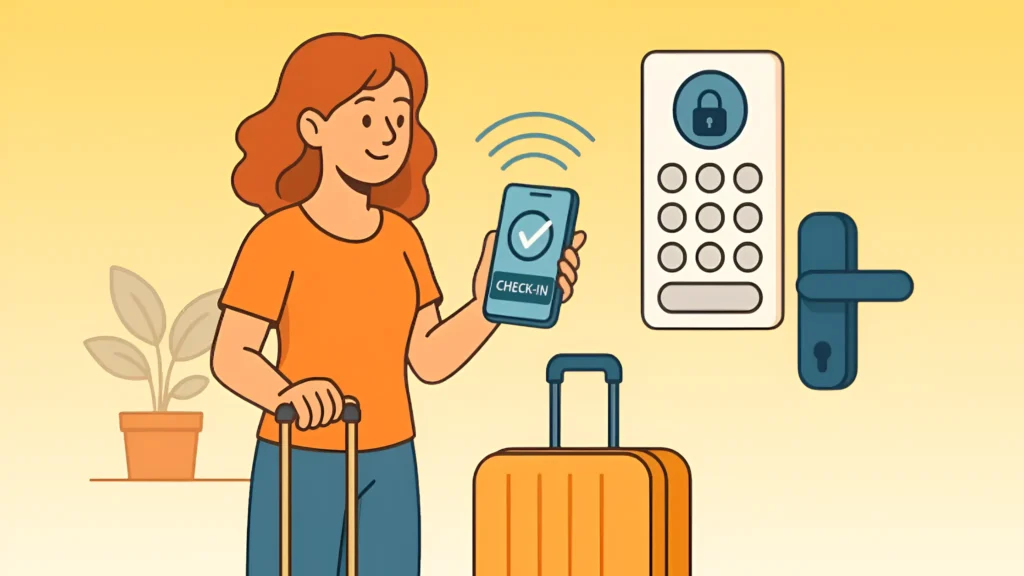
The hospitality sector has evolved tremendously over the past ten years. Contemporary consumers are demanding high-speed, convenience, and online solutions when booking a reservation. Waiting in long lines at the reception desk at the end of weary journey is no longer tolerable among most of the guests. Due to this development, Hotel mobile check-in is currently a significant innovation that enhances the arrival experience.
Most of the steps in the process of arrival can be executed on the smartphones of the guests even before they arrive at the premises and this is done without having to be in line and fill out forms at the front desk. The method is time-saving to the travelers and the hotel workers. Moreover, it enables the hotels to concentrate on personalized services instead of administration.
Numerous prominent hospitality technology systems, including Mews Hospitality Platform, have now implemented mobile check-in systems that are advanced. They assist hotels to automate their registration process, receive the details of their guests safely, and provide them with digital keys to their rooms.
Hotel mobile check-in is becoming a norm and not a luxury as hotels proceed to embrace digital solutions. Here, we are going to discuss how it works, why it is important and how successful it can be implemented in hotels.
What is Hotel Mobile Check-In?
Hotel mobile check-in is an online procedure through which customers can use their smartphones to check-in at the hotel and do payment prior to visiting the facility. Visitors typically get a link via email, SMS or a mobile app. In this connection, they are able to verify their booking information, send identification paperwork, and confirm payment.
Once these steps are done the system will confirm their arrival and in most cases give them a digital room key. The guests can then use QR codes or Bluetooth to unlock the door or enter a personal PIN into the door lock and gain access to their room.
Since the procedure is carried out on the device of the guest, the arrival process will be quicker and more comfortable. The travelers are assured of control over their schedule and the hotels are less crowded at the reception desk.
The other benefit of Hotel mobile check-in is that it enables hotels to gather the preferences of the guests at an early stage. As an example, the guests could demand to have a high floor room, early check in or additional services such as airport transportation.
Thus, the check-in procedure is no longer a basic administrative procedure but an individualized online experience.
How Traditional Hotel Check-In Works
Before mobile technology became common in hospitality, guests had to complete every step of the arrival process at the reception desk.
The traditional process typically includes:
- Waiting in line at the front desk
- Showing identification and a credit card
- Confirming reservation details
- Signing registration documents
- Receiving a plastic key card
This method still works but it usually takes time particularly at peak check-in times. Queues may be very long and irritating when a large number of visitors are accommodating.
Moreover, the front desk employees have to attend to redundant administrative work on behalf of each guest. This minimizes the amount of time that could be spent with the guests.
Due to these shortcomings, hotels began implementing Hotel mobile check-in to update the arrival process and enhance their operational effectiveness.
Why Hotel Mobile Check-In is Important
Hotels are in a very competitive business whereby the experience of the guests plays a vital role in determining the reputation and reservation. Customers are now demanding digital convenience in the same way that they have been used to in banking, shopping, or transportation applications.
Hotel mobile check-in is a significant contributor to fulfilling these anticipations. It saves on the waiting time and also provides the guest with additional control of the check-in procedure.
On the instance, passengers who check in online will reach their room without going through the check-in process. This will do away with waiting in lines or writing down applications.
Meanwhile, hotels are enjoying increased efficiency in operations. The personnel do not waste the major part of their working hours in order to input the guest information into the systems. Instead, they will be able to concentrate on hospitality activities like receiving visitors, suggesting activities in the area or helping them with special requests.
The system also provides additional revenue generation opportunities. During the digital check-in, hotels are able to offer room upgrades, spa, or food offerings.
Key Benefits
When the use of mobile check-in systems is introduced, hotels tend to experience a direct impact on the efficiency of their operations and the satisfaction of the guests.
To begin with, there is the increased speed of the arrival process. Visitors do not have to spend long queues and fulfill the majority of procedures beforehand. This gives them a more comfortable and relaxing entrance to their stay.
Second, hotels save on their operation expenses. Because most of the administrative functions are automated, employees require lower time to repeat.
Third, there is increased accuracy of guest data. In case travelers input their details straight into the system, mistakes that occur as a result of manually keying in details are reduced.
Fourth, the hotels are able to understand the preferences of guests. As an illustration, the guests can indicate special events, eating habits, or room needs when they check in online.
Types of Mobile Check-In Solutions Used by Hotels

Hotels can implement mobile check-in in different ways depending on their infrastructure and guest preferences.
The following table explains the most common solutions.
| Solution Type | How It Works |
| Self-Service Kiosks | Guests use lobby kiosks to scan ID, confirm details, and receive a room key. |
| Mobile App Check-In | Guests complete check-in through the hotel’s mobile application and receive a digital key. |
| Web-Based Check-In | Guests receive a secure link via email or SMS and complete check-in using any browser. |
Each approach helps hotels digitize the arrival process while maintaining flexibility for different types of travelers.
In many cases, hotels combine multiple solutions to create a seamless Hotel mobile check-in experience.
Challenges When Implementing Hotel Mobile Check-In
Despite the obvious advantages, the adoption of mobile systems to check-in needs to be planned.
Technology integration is one of the challenges encountered. Some of the systems that are commonly used in hotels are property management systems, payment systems, and door lock systems. These systems need to be compatible to make mobile check-in process a success.
User experience design is another problem. When the interface is complex or confusing, the guests might not go through with the process to the end.
There is also a role of digital literacy. There are guests who are still fond of the old system of checking in and those who are not fond of mobile applications.
Moreover, you need access to the internet which is trustworthy. Guests might be unable to open their online room key without a large Wi-Fi or mobile connection.
Best Practices for Implementing
Implementation cannot be successful through simple installation of new software. Hotels have to match technology, communication, and staff training and make an uninterrupted experience.
To begin with, hotels must combine the mobile check-in systems with the current technology platforms. This involves property management systems, payment gateways, and smart door locks.
Second, hotels ought to inform guests properly in advance. Education of the guest on the advantages of Hotel mobile check-in will help to increase the use of this tool and minimize misunderstandings.
Third, it is necessary to keep the staff trained. The system operation should be known to the employees so that they can assist the guests who face technical hitches.
Fourth, hotels can use the test mode to test the system prior to actual implementation. Pilot testing enables the hotels to know the issues and make the process better.
Lastly, the hotels ought to strike a balance between automation and attending to each customer. Hospitality should not be killed by technology but augmented.
Impact of Mobile Check-In on Guest Experience
The demands of guests keep changing with the inclusion of digital technology in the daily lives. Customers desire fast, convenient, and customized experiences.
Hotel mobile check in assists the hotels in fulfilling these expectations. The guests enjoy the possibility to manage the arrival process, as well as to prevent avoidable delays.
In addition, the online check-in system enables hotels to receive helpful information prior to the arrival of guests. This data will allow employees to organize tailored services, including getting transfers or suggesting local experiences.
Hotels which implement mobile check-in are more likely to be positively rated on travel websites like Tripadvisor since customers appreciate convenience and efficiency.
Future of Hotel Mobile Check-In
The hospitality industry is still being transformed by technology. Such innovations like artificial intelligence, smart room technology, and digital guest services are increasingly widespread.
Hotel mobile check-in will probably be a necessity of the majority of hotels in such a climate. Hotels will keep enhancing the process by incorporating biometric verification and enhanced security systems and customized digital services.
Also, the mobile check-in will be linked with other technologies in the hotel. An example of this is where guests can manage the lighting, temperature and entertainment in their rooms even after check-in using their smartphones.
Conclusion
The hospitality sector is evolving with the changing expectation of the guests, which becomes transformed with the use of technology. Long queues and paperwork during registration do not go with the modern fast-paced lifestyle of contemporary traveler.
Hotel mobile check-in will address this issue and will transfer the process of arriving to the smartphone of the guest. The guests will be able to check their data, validate reservations and access their rooms without queuing at the counter.
Simultaneously, the hotels are enjoying the benefits of efficiency, less administrative work, and new prospects of individual service. Employees will have increased time to work on hospitality instead of documentation.
Also Read About:- Hotel Digital Marketing Solutions for Modern Hoteliers