
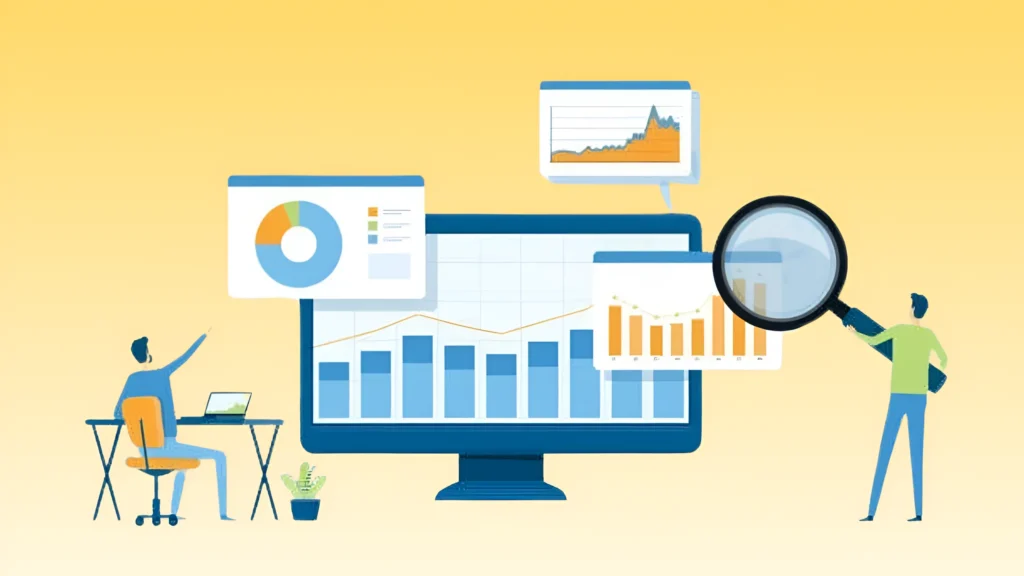
In the contemporary competitive hospitality world, we should not rely on intuition and conventional promotion. Improving Your Hotel’s Marketing With Data Analytics enables us to know our guests in a granular level, optimize each of our marketing channels and generate quantifiable revenue. As we examine precise information on our websites, booking engine, CRM, property management system and advertisement platforms, we substitute speculations with focused tactics. This translates to more direct booking, less acquisition expenses and develop better guest loyalty.
Data does not just lie in reports, but it provides the patterns, behaviors, and opportunities. Thus, by basing our marketing choices on analytics we will have good visibility of what is effective and what is budget killer. In addition, we are quicker than the competitors since we perceive trends even before they are evident.
Improving Your Hotel’s Marketing With Data Analytics Through Clear Guest Insights
This begins with knowing whose company we have. The age, gender, and location, device usage, income levels, and the level of travel purpose are demographic data that would allow us to narrow our messages. Moreover, the behavioral data including the length of session, booking periods, and frequency of repeat visits expose purchasing intentions.
In analyzing the data on such tools as Google Analytics, we can identify the segments of the audience that bring the most income. Indicatively, we can observe that young professionals often make one-night stays during working days. Therefore, we can develop packages with fast Wi-Fi, flexible check-in, and breakfast packages.
On the same note, we can determine the level of social engagement through insights of social engagement of Meta Business Suite, which we can use to determine who views our posts and ads. Consequently, we match images, color, and promotions with what our most powerful audience groups prefer.
Moreover, the data of booking engine are real-life purchase behavior. Upon cross-referencing the data on bookings with the data on the analytics of the websites, we determine discrepancies. An example is when the traffic of a particular demographic is failing to convert, we would also change pricing, message, or landing page architecture.
Improving Your Hotel’s Marketing With Data Analytics by Optimizing Your Website Performance
Our online store is our key online storefront. That is why, on each page, a visitor should be directed to the process of booking. Using analytics, we track:
We investigate at the first instance when we notice high bounce rates on a page having a title of Rooms. Friction is often brought about by slow loading time, ambiguity on pricing or lack of call-to-action buttons. After correcting all these, then conversions are much more efficient.
Besides, we examine user journeys. In case the guests often leave the booking engine during the payment phase, we simplify the procedure. We are eliminating unnecessary form fields, explaining the cancellation policy, and showing trust badges. As a result of this, we eliminate obstacles that barred revenue in the past.
We monitor performance on a weekly basis and therefore, are able to pick tiny issues before they transform into big losses. Thus, a constant evaluation guarantees a steady improvement.
Improving Your Hotel’s Marketing With Data Analytics to Strengthen SEO and Paid Campaigns
Search visibility will make or break guests find us or the competitors. As such, we consider the performance of both organic and paid search.
On tools like SEMrush and Ahrefs, we monitor ranking of the key words, competitor tactics and backlinking development. Meanwhile, we analyze the performance of paid campaigns within Google ads.
In the case of the weekend getaway in Sheffield, when high paid conversions are received, we create optimized organic landing pages with the same phrase. We then cut down on the dependency of advertising in the long run and our SEO base.
We also track cost per click, cost per acquisition and return on ad spend. When some keywords are empting our budget without getting any booking, we immediately stop them or narrow them down. As such, we will only spend money on areas that make us profits.
We can evaluate the performance of our marketing budget by regularly reviewing the performance data so that we are getting quantifiable revenue rather than vanity measurements.
Improving Your Hotel’s Marketing With Data Analytics in Email Campaign Strategy

Email marketing is considered one of the strongest tools in regards to repeat bookings. Nevertheless, to be successful, segmentation and personalization is needed. Therefore, we analyze:
Guests, having booked spa packages, react better to wellness promotion, thus we segment them. Similarly, business travelers are offered corporate packages rather than family packages.
Moreover, subject line performance is analyzed. In case, the shorter subject lines are resulting in high open rates, we change our strategy. In case weekend campaigns are more effective than the ones held during the weekdays, we change the schedule.
Since we are not acting on assumptions, but it is on data, then each email campaign will be more focused and more profitable.
Improving Your Hotel’s Marketing With Data Analytics for Revenue Forecasting and Trend Prediction
Historical data helps us predict future performance. When we analyze booking trends across months and seasons, patterns emerge. For example, if January consistently shows last-minute booking spikes, we design early-bird campaigns in November and December.
Moreover, we evaluate:
- Average daily rate trends
- Occupancy fluctuations
- Booking lead times
- Cancellation patterns
When we detect a dip in mid-week occupancy, we introduce limited-time weekday offers. Conversely, if peak dates fill quickly, we adjust pricing to maximize revenue.
Predictive analysis empowers us to act proactively rather than reactively. Consequently, we stabilize revenue throughout the year.
Core Data Sources That Drive Hotel Marketing Performance
| Data Source | Key Insights | Marketing Impact |
| Website Analytics | Traffic sources, bounce rate, conversions | Website optimization & SEO refinement |
| Booking Engine | Revenue, booking windows, guest demographics | Pricing & offer personalization |
| PMS Data | Repeat guests, stay history | Loyalty campaigns |
| Email Platform | Open & click rates | Campaign optimization |
| Paid Ads Dashboard | Cost per acquisition, ROAS | Budget allocation decisions |
| Social Media Insights | Audience engagement, demographics | Content targeting strategy |
This structured approach ensures we do not rely on a single platform. Instead, we integrate multiple data streams to create a complete marketing picture.
Setting Clear Goals Before Analyzing Data
We set specific objectives that are measurable before the collection or analysis of data. We can work on the goal of growing direct bookings by 20 percent, or enhancing the return on ad spend, or decreasing the booking abandonment rates.
Specific objectives enable us to shortlist irrelevant information. Otherwise, it may get us bombarded with numbers that are out of context. We hence match each measure with a predetermined business result.
Choosing the Right Analytics Tools
Tools that we choose are in accordance with the complexity of our operations and stage of growth. Google analytics offers detailed information in the case of tracking a site. In the case of SEO analysis, competitive intelligence is provided by SEMrush or Ahrefs. Google Ads and social dashboards can give real-time performance metrics as a campaign tracker.
We do not separate these tools, though. System communication brings about a cohesive marketing view.
Maintaining Consistent Data Review Cycles
Data analysis should not occur once per quarter. Instead, we implement structured review cycles:
- Weekly performance reviews
- Monthly revenue analysis
- Quarterly strategy adjustments
Because we review data regularly, we identify trends early. Moreover, we adapt quickly to changes in guest behavior or market conditions.
Turning Insights Into Action
Information in itself does not make money. Action does. We thus make changes instantaneously after analysing insights. We also experiment with new landing pages, bid on ads, re-design email templates, and content strategy.
Besides, we perform periodic A/B testing. In the case of two competing offers, we test them, and scale the one with better performance. Consequently, performance keeps on getting better and better.
Conclusion
In the contemporary hospitality world, clarity, accuracy and flexibility are the key to success. Through systematic analysis and persistent optimization, we work the raw information into revenue-generating strategies. We tighten our targeting, enhance our presence in the online world, create a personalized guest experience and increase the ROI.
Data analytics does not make hotel marketing complex, on the contrary it makes the decision-making process easier. Once we do what is correct, we will save on waste, make more bookings, and create a sustainable growth.
Also Read About:- Types of Services in Hotel: Creating Exceptional Guest Experiences